
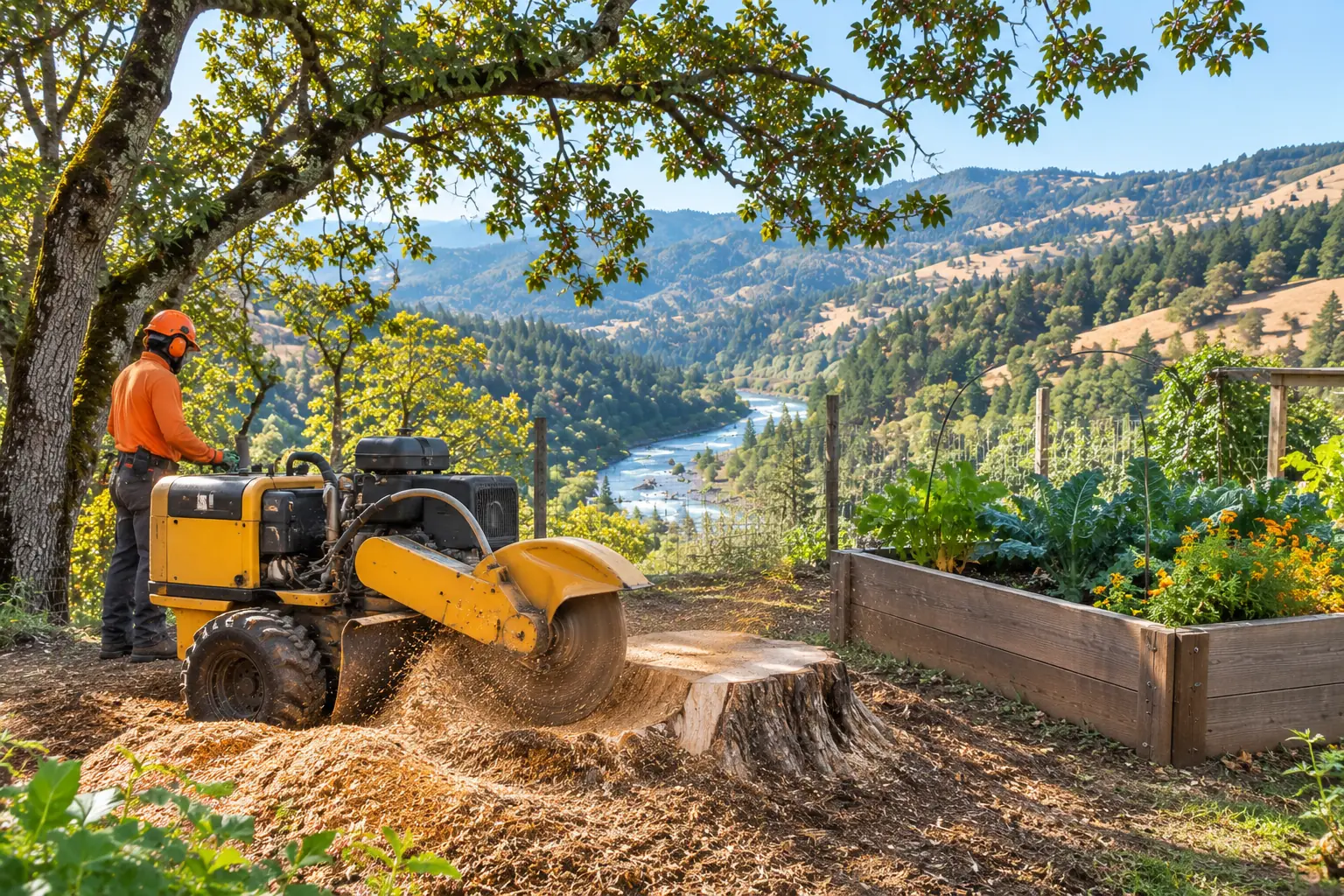
Stump grinding in Gold Hill turns a cut stump and its top roots into a pile of wood chips, usually several inches below the soil, so the spot can be mowed, planted or built on. Call (541) 502-8114 to be connected with an independent tree service that holds an Oregon CCB license. One company takes the request. Have it put a tape on the stump and a price on paper.
Tree Service Gold Hill is a free referral service, not a stump company. It does not grind, haul or price anything. This page covers the difference between grinding and pulling a stump, why some Gold Hill stumps keep sending up shoots, how deep a grind goes, what sets the price, the utility locate call, the fire season rules for grinders, and what to ask the company. The home page explains how a call reaches a local company.
Grinding compared with pulling the whole stump
Most homeowners choose grinding because it leaves the yard flat with the least digging. Pulling the stump, roots and all, is a bigger job that leaves a hole to fill.
| Stump grinding | Full stump removal | |
|---|---|---|
| What happens | A spinning cutter wheel chews the stump into chips | An excavator or winch pulls the stump and main roots out |
| What is left | A shallow hole full of chips and soil, side roots in the ground | A crater to backfill, few roots left |
| Best for | Lawns, garden beds, most home lots | Building pads, foundations, new driveways |
| National price (LawnStarter, Oct. 5, 2026) | $131 to $438 per job, average $272 | $175 to $516 |
Prices are from LawnStarter's stump grinding cost guide. If you are building over the spot, tell the company, because it changes which method fits.
Why oak and madrone stumps keep coming back
Some native stumps around Gold Hill do not die when the tree is cut. ODF's Oregon white oak profile says white oak is able to send up new shoots from a cut stump or from its root collar. OSU Extension says Pacific madrone has a large woody tuber that can resprout after cutting or fire.
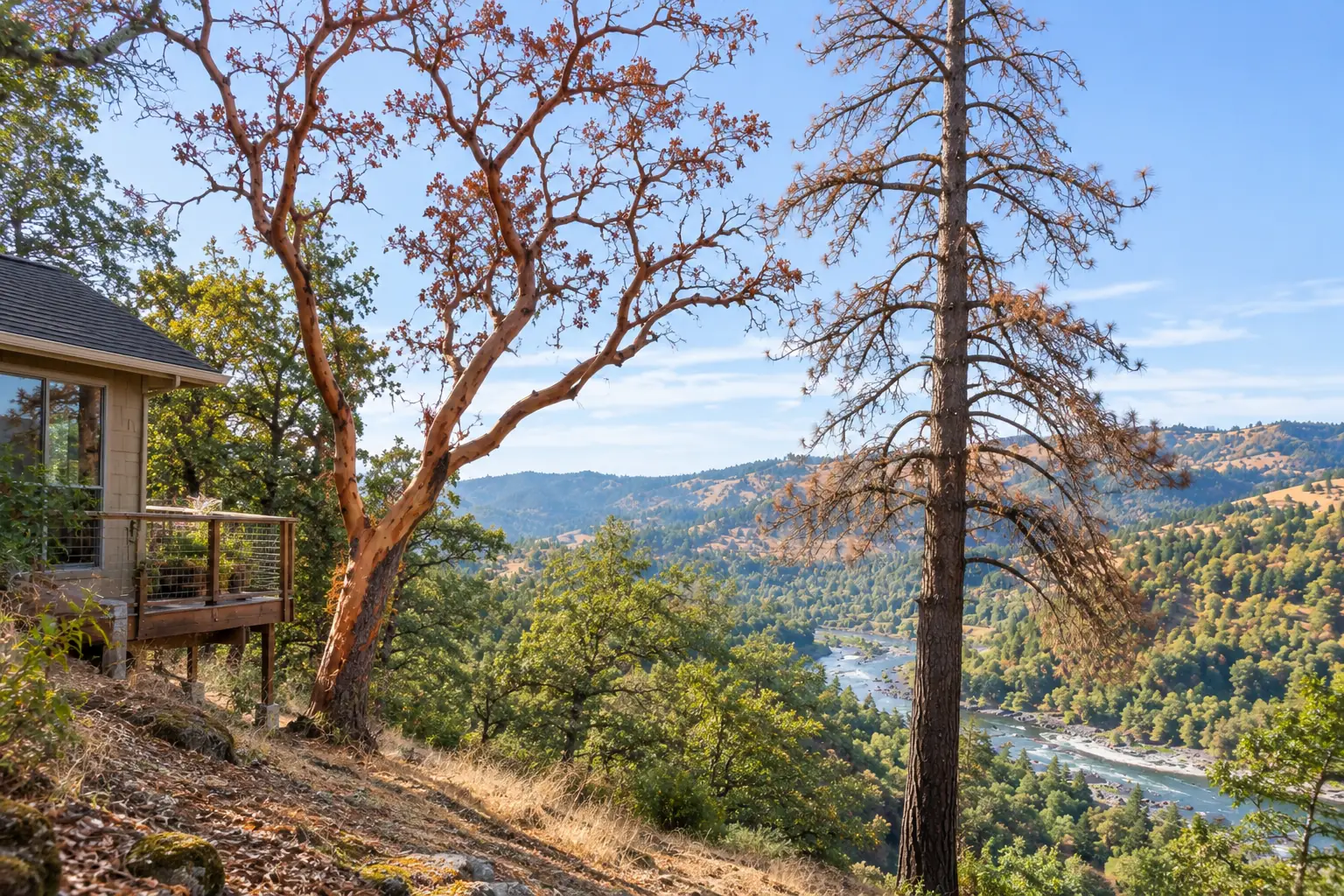
That matters for how deep you ask the company to grind. A shallow grind on a big oak or madrone can leave enough living tissue for a ring of new shoots by summer. Ask whether the crew will grind out the root collar and the base of the larger surface roots, and what it suggests if sprouts appear later. Pines and firs, by contrast, generally do not sprout from a cut stump, so a standard grind is usually enough for a conifer.
If you have native trees you want to keep, the madrone and oak care guide covers how to look after them.
How a crew grinds a stump, step by step
The machine and the method depend on stump size and how close the crew can get. A walk-behind grinder is narrow enough for most side yards. Bigger towed or tracked units take on large oak and pine stumps where there is room to maneuver.
- Locate check. The crew confirms the utility locate is done and marks are visible.
- Clear the area. Rocks are pulled out of the way, because a cutter wheel that hits a rock can throw it hard.
- Set up shields. Plywood or mesh screens protect windows, siding, cars and garden beds from flying chips.
- Grind. The operator sweeps the wheel side to side across the stump, dropping deeper with each pass until it hits the depth in the estimate.
- Chase surface roots. Large roots running out from the stump are ground for a short distance if the estimate includes it.
- Clean up. Chips are raked back into the hole, spread, or hauled away, depending on what you agreed.
Wood chips settle and break down. Over the following year the patch usually settles into a shallow dip. If you want to plant grass right away, ask the company to remove most of the chips and fill the hole with topsoil.
Call 811 before any grinding starts
A stump grinder cuts below the surface, and buried power, gas, water and cable lines often run near old trees. Oregon's locate service, Dig Safely Oregon, says its definition of excavation includes planting a tree, and it notes that cutting down and dragging trees with heavy equipment can damage buried lines. A locate request goes in at least two full business days, and no more than 10 business days, before the work. Call 811, or 1-800-332-2344, or ask the company whether it files the request for you.
Locate marks only cover lines owned by utilities. A private water line from the well to a shop, an irrigation main or a buried line to a pump house will not be marked. Tell the crew about any of those you know of.
Grinding during fire season around Gold Hill
A gas stump grinder is an engine that can throw sparks off rock, and the state's fire order does not name it, so it falls under the catch-all rule. Under the Southwest Oregon District's Regulated Closure Proclamation No. 01, effective May 15, 2026, any spark-emitting internal combustion engine not named elsewhere in the order is banned at extreme fire danger. At low danger it may run all day, at moderate danger before 1 p.m. and after 8 p.m., and at high danger before 10 a.m. and after 8 p.m.
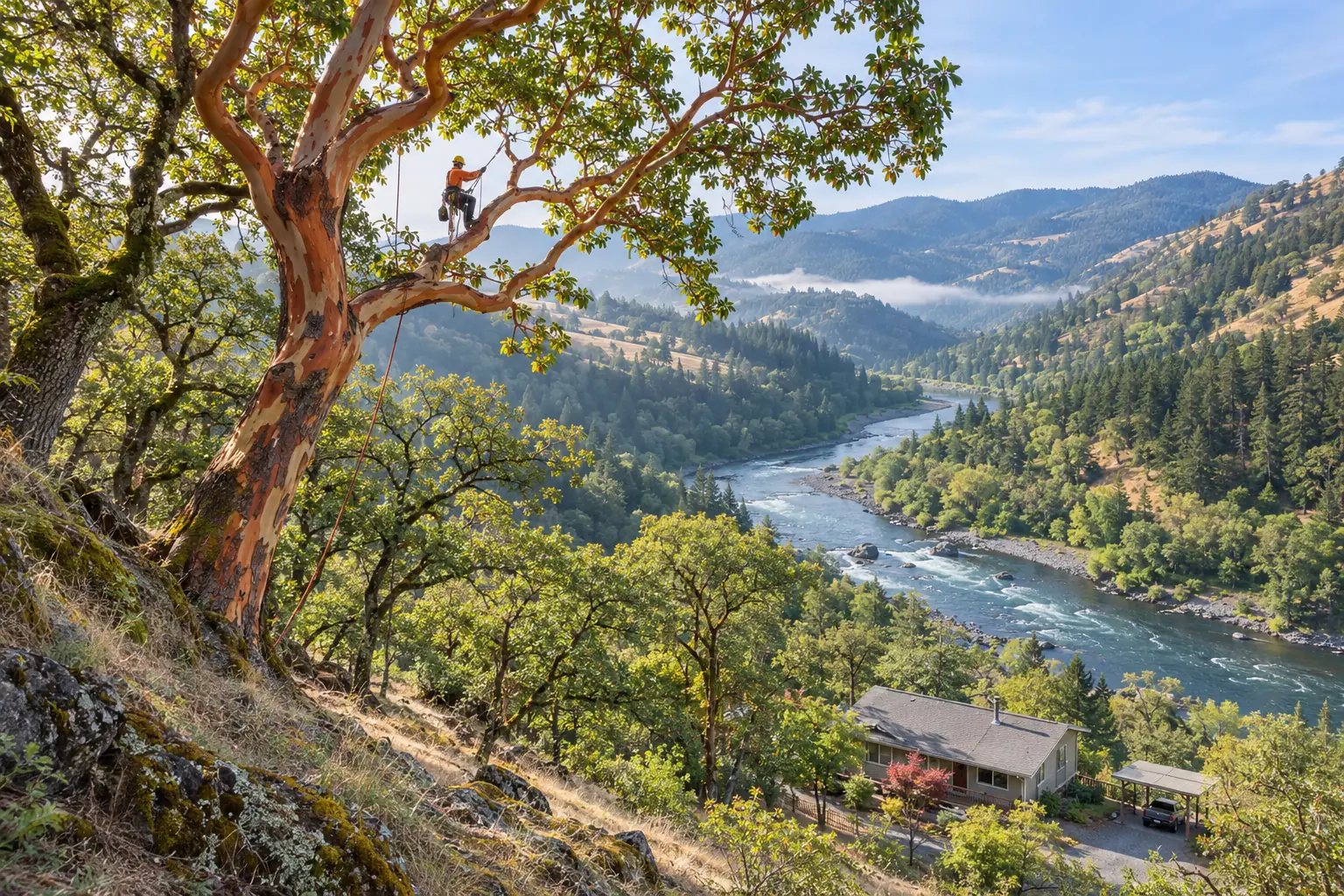
It also has to run in a cleared area, which the proclamation defines as free of flammable vegetation for 50 feet in all directions, with a charged garden hose or a 2.5 pound or larger extinguisher at hand. A stump in a dry August field may need mowing or watering first, and mowing dry grass has its own hour limits. The easiest months for stump work are after fire season ends in fall and before it starts again in May. The fire season rules guide explains the danger levels.
What sets the price of stump grinding
Most grinding quotes start from the stump's diameter, with a minimum charge. LawnStarter's guide (updated October 5, 2026) lists these national figures:
- $2 to $5 per inch of stump diameter, with a minimum fee of about $100.
- Small stumps up to 10 inches: $40 to $75. Large stumps over 30 inches: $200 to $417.
- Each extra stump on the same visit: about $37 to $70.
- Hardwoods such as oak: $50 to $150 more per stump.
- Hauling the chips away: about $2 to $3 per diameter inch.
- Older, softer stumps grind faster and usually cost less.
On a Gold Hill lot, a big white oak stump on a slope, surrounded by rock, sits at the top of those ranges. A rotted pine stump on a flat lawn sits near the bottom. Getting the stump ground on the same trip as the tree removal usually saves a second setup charge. The company's written estimate is the price that counts, and the tree service cost guide has more comparisons.
Stumps near the Rogue River
Grinding a stump close to the river is ground disturbance, and the city's riparian rules may apply. Gold Hill's Title 17, Section 17.49.040, holds plants and trees in place for 75 feet back from the river's top of bank, with a few listed exceptions. A stump in that band may also be holding the bank together. Call City Hall at (541) 855-1525 before grinding within that distance, and leave the stump in place if the city or a stream specialist suggests it.
What to ask before you book stump grinding
These questions keep the result matched to what you want the spot to become:
- How deep will you grind, and will you grind out the root collar on an oak or madrone?
- Will you chase surface roots, and how far?
- Do you file the 811 locate, or should I?
- What happens to the chips: left in the hole, spread, or hauled away?
- How do you protect windows, cars and garden beds from thrown chips and rocks?
- Is the price per stump, per inch, or a flat rate for all of them?
- What is your Oregon CCB number? Check it on the CCB license search.
Frequently asked questions
How deep does a stump grinder go?
It depends on the machine and what you ask for. Many jobs go several inches below the soil, which is enough for lawn. If you plan to plant a tree or build in the spot, ask for a deeper grind in the written estimate.
Will the stump grow back after grinding?
Pine and fir stumps generally do not resprout. White oak can sprout from stumps and root collars, and madrone can resprout from its woody tuber, so grinding those deeper and pulling any new shoots helps.
Can I plant a new tree where the old stump was?
Usually, but not in the chips. Ask the company to remove most of the chips and backfill with soil, and plant slightly off the old center if large roots remain.
Do I really need to call 811 for a stump?
Dig Safely Oregon counts planting a tree as excavation and warns that heavy tree work can damage buried lines. A grinder cuts below ground, so a locate request two full business days ahead is the safe step.
Is stump grinding allowed in fire season?
Yes, within limits. ODF's 2026 order lets spark-emitting engines run in a cleared area with a hose or extinguisher during set hours at low, moderate and high fire danger, and bans them at extreme danger.